German-American Heritage Museum of the USA™

Follow us
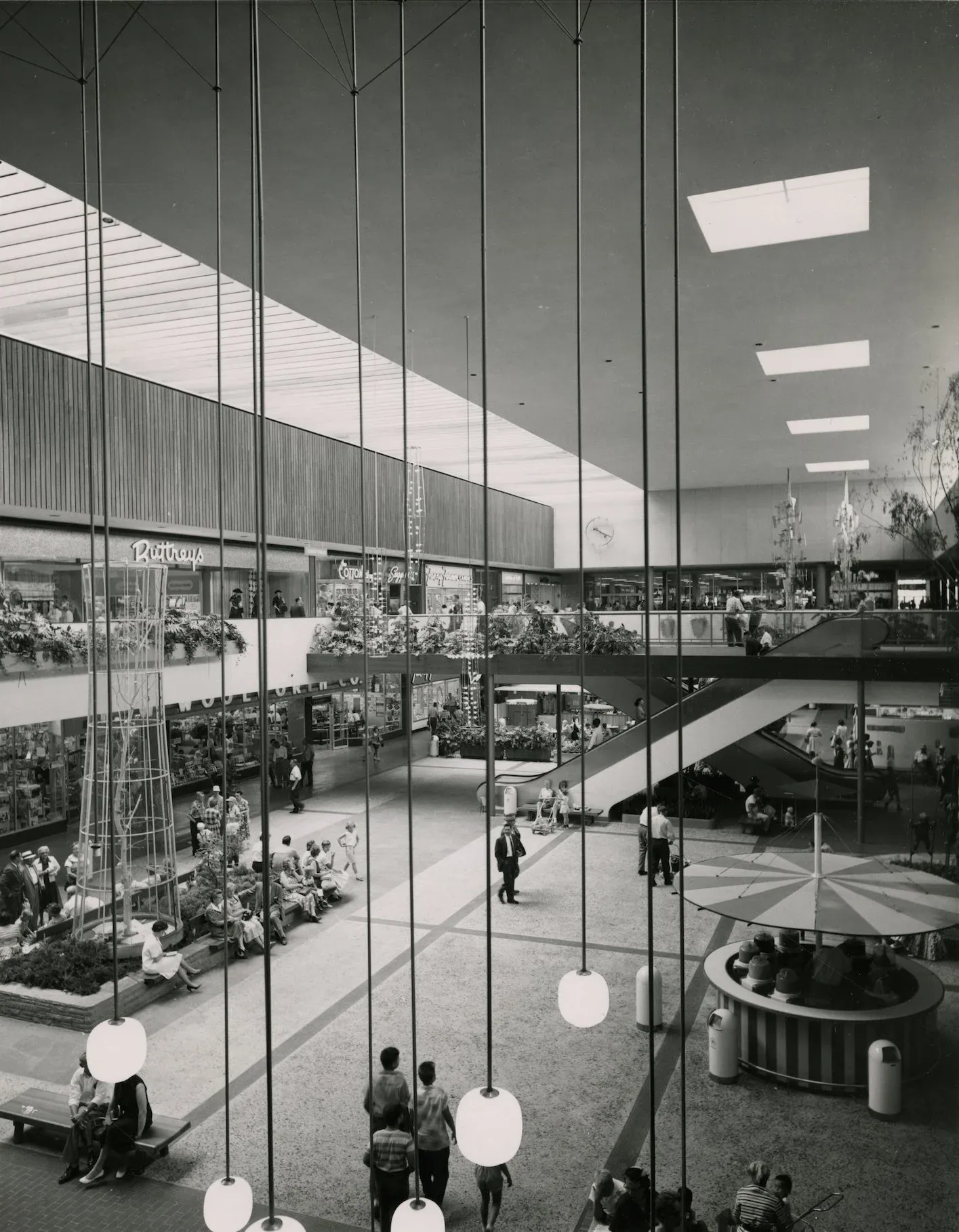
Southdale Shopping Center

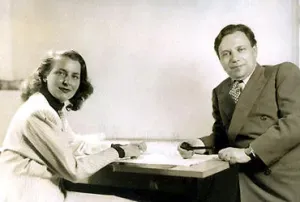
Elsie Krummeck and Victor Gruen

Peter Behrens
Architect Victor Gruen and the American Century–Father of the Modern Shopping Mall
The retail environment of the 21st century has undergone significant changes: shopping malls, once the definition of modern convenience and luxury, are struggling with many facing closure and redevelopment into mixed-use structures. In this exhibit, we will revisit the life and professional career of a bold visionary and one of America’s great urban planners: Victor Gruen.
The Viennese architect and urban planner Victor Gruen (1903–1980) was born into an era called Fin de Siècle (end of the century) that was marked by a seemingly contradictory mix of pessisim and social degeneracy along with the hope for a new beginning and a better future. The city was still the hub of the multiethnic Habsburg empire where the old imperial architecture and traditions collided with new ideas and styles.
Gruen studied architecture at the Vienna Academy of Fine Arts, and also became active in political cabaret. As a young architect, he was mentored and taught by Peter Behrens, a German architect, graphic and industrial designer, who designed and built the AEG Turbine Hall in Berlin in 1909, and the Hoechst AG Administration Building outside of Frankfurt from 1920-1924. Behrens headed the architecture school at the Academy of Fine Arts from 1922 to 1936, and several European modernists began their careers working for him, including Walter Gropius and Ludwig Mies van der Rohe.
In 1933, Gruen opened his own architectural firm in Vienna, and specialized in the remodeling of shops and apartments. Just five years later, in 1938, he fled the Nazis, and emigrated to the United States. He arrived in New York City with an architecture degree, eight dollars, and no English, but a desire to work and to succeed. He sought employment as a draftsman, and after his design of the Lederer Leather Goods boutique on Fifth Avenue, other shop design commissions followed, including eleven branches of the Grayson’s clothing chain. He married the German American industrial designer Elsie Caroline Krummeck in 1940, and they founded a firm called Gruen & Krummeck.
In 1941, the couple moved to Los Angeles, and there they submitted a proposal for a 1943 competition in the Architectural Forum magazine which asked architects to envision the retail center of the post-WWII era. Their design focused on communal aspects and visually pleasing aesthetics of the proposed shopping center where services like the public library and the post office could be incorporated with retail.
It wasn’t until 1948, while stranded in Detroit, Mich. during a snowstorm, that Gruen approached Oscar Webber, head of Hudson’s, the second largest department store in the nation at the time. Gruen asked Webber to help fund a shopping center in the suburbs of Detroit with Hudson’s as the main draw. A concept that later became known as an anchor store. Webber initially declined, but a year later Hudson’s agreed to finance a set of malls including the Northland Center as customers moved out of the city and into the suburbs. It was Webber who later introduced Gruen to the Dayton family, the owners of the Dayton’s department store chain headquartered in Minneapolis, Minn. On June 17, 1952, the first plans for a new shopping center were announced by Gruen and Donald Dayton, president of Dayton’s. The estimated cost to build the center was around $10 million–the equivalent of $123 million in 2026. The public response was very positive as Gruen envisioned a structure that would allow people to shop, drink coffee, and socialize. Southdale Center was modeled on the arcades of several heavily populated European cities and purposely included eye-level display cases to entice customers. The Southdale Center in Edina, Minn. opened in 1956, and became the first fully-enclosed shopping mall. Gruen became known as the “father of the modern shopping mall”–a paternity he later rejected.
Although the mall was commercially successful, Gruen’s original design ideas were never fully realized, as the intended apartment buildings, schools, medical facilities, the park and lake were never constructed. Gruen went on to design more than 50 shopping malls as well as other influential projects.
In 1968, he returned to his native Vienna where he was instrumental in transforming the inner city into a pedestrian zone centered around the Graben and Kärntner Straße, the first of many pedestrian zones which arose in Austria and Germany in the 1970s and 1980s.
He died on Feb. 14, 1980.
This exhibit is made possible with the generous support of the Embassy of Austria. We especially thank Dr. Hannes Richter for his curatorial expertise and support.